Ebook Lectures On Quantum Mechanics (Lecture Notes and Supplements in Physics)
In this case, investing more time to check out the Lectures On Quantum Mechanics (Lecture Notes And Supplements In Physics) web page by web page can hold the appropriate feature of analysis. This is just one of the means for you who truly wish to take the straightforward reading as the referred task. You could obtain the book to supply also for your pals as the book to refer. Once more, this subject of the book will certainly give you matched lesson to the topic.
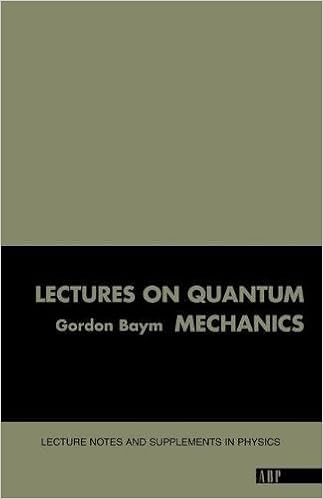
Lectures On Quantum Mechanics (Lecture Notes and Supplements in Physics)

Ebook Lectures On Quantum Mechanics (Lecture Notes and Supplements in Physics)
Invest your few minute to read a book even just couple of pages. Reviewing book is not commitment and pressure for everybody. When you don't wish to check out, you could get penalty from the author. Review a publication becomes a selection of your different qualities. Lots of people with analysis behavior will always be satisfying to review, or on the other hand. For one reason or another, this Lectures On Quantum Mechanics (Lecture Notes And Supplements In Physics) tends to be the depictive book in this site.
Spending the moment for checking out a publication will offer you the really useful system. The system is not only concerning obtaining the knowledge to associate with your certain condition. But, often you well require fun point from guide. It could accompany you to run the time meaningfully and also well. Yeah, good time to check out a publication, great time to enjoy. And also the visibility of this book will be so accurate to be in yours.
Guide is a book that could assist you discovering the truth in doing this life. In addition, the advised Lectures On Quantum Mechanics (Lecture Notes And Supplements In Physics) is also composed by the specialist author. Every word that is offered will certainly not worry you to think roughly. The way you love analysis could be started by an additional publication. Yet, the method you should read publication again and again can be started from this recommended publication. As referral this publication likewise offers a better idea of ways to bring in individuals to check out.
After understanding this really easy method to read as well as get this Lectures On Quantum Mechanics (Lecture Notes And Supplements In Physics), why don't you tell to others concerning by doing this? You can tell others to see this internet site and opt for browsing them favourite publications Lectures On Quantum Mechanics (Lecture Notes And Supplements In Physics) As known, here are bunches of lists that offer many kinds of publications to accumulate. Just prepare few time and also web connections to get guides. You can really appreciate the life by checking out Lectures On Quantum Mechanics (Lecture Notes And Supplements In Physics) in a really basic manner.
These lecture notes comprise a three-semester graduate course in quantum mechanics at the University of Illinois. There are a number of texts which present the basic topics very well; but since a fair quantity of the material discussed in my course was not available to the students in elementary quantum mechanics books, I was asked to prepare written notes. In retrospect these lecture notes seemed sufficiently interesting to warrant their publication in this format. The notes, presented here in slightly revised form, consitutute a self-contained course in quantum mechanics from first principles to elementary and relativistic one-particle mechanics. Prerequisite to reading these notes is some familiarity with elementary quantum mechanics, at least at the undergraduate level. Preferably the reader should already have met the uncertainty principle and the concept of a wave function. Prerequisites also include sufficient acquaintance with complex cariables to be able to do simple contour integrals and to understand words such as "poles" and "branch cuts." An elementary knowledge of Fourier transforms and series is necessary. I also assume an awareness of classical electrodynamics.
Your recently viewed items and featured recommendations
›
View or edit your browsing history
After viewing product detail pages, look here to find an easy way to navigate back to pages you are interested in.
Product details
Paperback: 608 pages
Publisher: The Benjamin / Cummings Publishing Company; 1 edition (January 22, 1969)
Language: English
ISBN-10: 0805306676
ISBN-13: 978-0805306675
Product Dimensions:
5.5 x 1.4 x 8.5 inches
Shipping Weight: 1.9 pounds (View shipping rates and policies)
Average Customer Review:
2.7 out of 5 stars
15 customer reviews
Amazon Best Sellers Rank:
#1,017,700 in Books (See Top 100 in Books)
I am extremely unhappy with the version of this text that I have received. The version that I received has many missing characters and faded information within the text. For example sometimes I cannot tell if a letter is bolded (since it is a vector) or regular font (for scalars) in equation where the nature of the variable isn't obvious. Friends of mine have received the same textbook, but have not had this problem. On page 117, a plus sign turned into a muliplication sign because of the lack of decent print quality. I do not think that you should buy this textbook from this seller given the incredibly poor print quality. I paid for a new version of a graduate textbook to avoid this issue, not run head first into it. See pictures for examples!
Old is gold. There are some very useful material here such as scattering theory and perturbative techniques etc.
The font is unreadable! Buy other versions. Also, the index is worthless.
Perhaps I'm biased towards treatments like Sakurai, but this book was way too dedicated to basic wave mechanics and belabored wave treatment instead of more technical and formal treatments.
Bad quality printing. I have the original textbook since 1978 and bought this one to replace it. Although be a very nice quantum mechanics textbook for PhD students, the quality printing of this edition is very bad!
i bought it because my professor chose it as our textbookit is a good book anyway
This book grew out of Gordon Baym's Quantum Mechanics lectures at the University of Illinois at Urbana-Champaign in the late 1960's. As such, it is really more suitable as a companion text rather than as a primary text. That said, I found that Baym provides a degree of physical intuition that is not found in the standard texts. I especially like Baym's discussion of creation and annihilation operators as well as Fermi's Golden Rule. Baym also provides a good treatment of the Klein Gordon and Dirac equations, the relativistic analogues of the Schrodinger equation for Bosons and Fermions. In general, Baym seems to have the intention of supplying the reader with the necessary preparation for the study of quantum field theory--an approach understandable in light of the fact that Julian Schwinger (one of the pioneers of quantum field theory and co-winner of the 1965 Noble Prize and physics for quantum electrodynamics along with Feynman and Tomonaga) was Baym's Ph.D. adviser.Emblematic of this book is its discussion of the topic "Angular Momentum and The Harmonic Oscillator" (pp.380-386) within Chapter 17 which covers "Rotations and Tensor Operators." Based on a 1952 Atomic Energy Commission (What the Department of Energy used to be called) report by Julian Schwinger, angular momentum is modeled as two harmonic oscillators, each corresponding to its own creation and annihilation operator which moves the value of each oscillator up or down by a spin 1/2 "quantum". The total number of spin quanta shared by the two oscillators is seen to correspond to the angular momentum quantum number j. The difference between the number of spin quanta in each oscillator then corresponds to the quantum number m. Of course there are various commutation relations between the operators and before you know it, you have a clever way of calculating rotation matrix elements. There is even an amusing post-script that a scheme involving three harmonic oscillators corresponding to "quarks" can be used to generate the SU(3) symmetries of strongly interacting particles. Back when Baym first penned this textbook he observed that "It is an open question whether the quarks are real particle or not".
Come on, it's not that bad. It has an interesting way of taking your natural understandinig of polarized light as 2 orthogonal states to try to give you some insight into that as a quantum mechanical system and then generalizing that understanding to other QM systems. Baym learned his advanced quantum mechanics at Harvard, where they would use his book as the closest text to what they were teaching for a number of years (at least when taught by his instructor). It was a reasonable text, used at Illinois and Harvard, which had good physics departments.
Lectures On Quantum Mechanics (Lecture Notes and Supplements in Physics) PDF
Lectures On Quantum Mechanics (Lecture Notes and Supplements in Physics) EPub
Lectures On Quantum Mechanics (Lecture Notes and Supplements in Physics) Doc
Lectures On Quantum Mechanics (Lecture Notes and Supplements in Physics) iBooks
Lectures On Quantum Mechanics (Lecture Notes and Supplements in Physics) rtf
Lectures On Quantum Mechanics (Lecture Notes and Supplements in Physics) Mobipocket
Lectures On Quantum Mechanics (Lecture Notes and Supplements in Physics) Kindle